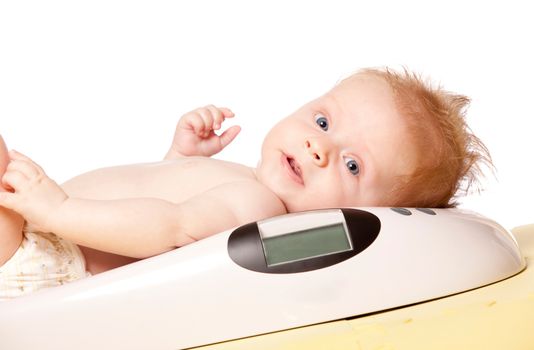
So big-headedness might not necessarily be a bad thing? A pioneering new study from researchers in Australia has suggested that babies who put on more weight in their first month of life and have larger heads have higher IQs when they start school.
Researchers from the University of Adelaide studied 13,800 children who were born at full-term. The research team took a close look at how much weight a baby gains during its first month and found that it could determine its IQ.
They found that those who put on 40 percent of their birth weight in the first four weeks of life had an IQ which was on average 1.5 points higher than those who only put on 15 percent of their birth weight.
The study found that babies who had a larger growth of head circumference had a significant increase in IQ by the age of six.
“Head circumference is an indicator of brain volume, so a greater increase in head circumference in a new born baby suggests more rapid brain growth,” said lead author of the study, Dr Lisa Smithers.
“Overall, new born children who grew faster in the first four weeks had higher IQ scores later in life” she said.

“Those children who gained the most weight scored especially high on verbal IQ at age six. This may be because the neural structures for verbal IQ develop earlier in life, which means the rapid weight gain during that neonatal period could be having a direct cognitive benefit for the child.”
Previous family studies have highlighted the link between postnatal diet and brain development, but this is the first that focuses on babies and weight gain in the first month as a key factor to promoting better IQ.
Looks like that’s another important reason to keep an eye on the scales!