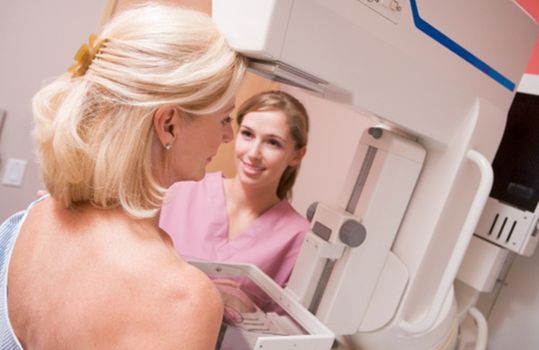
Mammograms no more…?
Women might be able to leave inconvenient mammogram checks behind in the future and instead have a simple annual blood test to check for early signs of breast cancer.
British researchers are developing a blood test that scans for tell-tale warning signs in their DNA. It is suggested that it could even be more accurate than x-rays at spotting the disease in an early stage.
Trials are now starting a trial at Charing Cross Hospital, London and hope to take blood from 500 women who have been asked to return to the hospital after shadows were spotted on their mammograms.
The researchers plan to compare the DNA of the women who will be diagnosed with breast cancer with those found to be free of the disease. They will see what DNA markers are consistent. They have already found some DNA markers that indicate when breast cancer is present.
Dr Jacqui Shaw, head researcher at the Leicester University, told The Telegraph: “This exciting research means we could one day have a blood test that detects the very early signs of cancer, meaning women could have an annual blood test rather than breast screening.”
Shaw also said that if everything goes well, the new system may be available in five years.
“I think this approach has the potential to impact significantly on screening in quite a short time,” Dr Shaw said.
The study is being funded by Cancer Research UK.
Professor Charles Coombes said: “When a woman has breast cancer we can tell by the DNA in their blood.
“But what we’re trying to find out in our study is how early the signs of breast cancer show up in a blood test.”
It has been indicated so far that the test could pick up cancer earlier than identifying lumps by x-ray.
“By looking at blood samples of women who have breast cancer diagnosed through screening we can see if the cancer is already showing in their blood.
“It could provide the clinician with some idea of what genetic abnormalities are occurring in the cancer, and that will help the clinician treat the patient more specifically and with less toxicity,” he said.
The researchers are also looking at applying the technique to lung and bowel cancer.
Six women a day in Ireland find out they have breast cancer and 650 women in Ireland die from the disease annually. Early detection of the disease can mean it is easier to treat and the woman has a higher chance of survival.
Keep your breasts healthy with these tips here.