Five years ago, reader Breifne Earley wrote down ten goals. Those goals became his crutch on the road to recovery following depression and suicidal thoughts. Here he shares his journey.
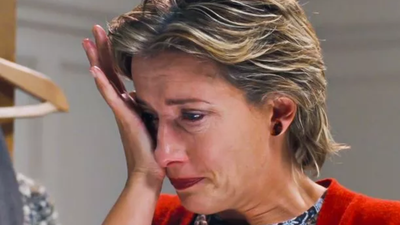
Five years ago in October 2010, I made the decision to end my life. Sitting in my rented room in a shared house I decided that the world would be better off without me.
I weighed over 20 stone on the scales, hadn’t gotten a second glance from a girl in nearly two years and was bitterly unhappy with every second I spent in my workplace.
Before I had the opportunity to act on that decision, I was stopped by an invite to a memorial service for a cousin who had died as a child twenty years previously. Thinking of the devastation that I would plunge my family into for the remainder of their lives, I realised suicide wasn’t an option for me.
Albert Einstein defined insanity as “doing the same thing over and over again and expecting different results”. I knew I had to change something in my life to push these thoughts as far away from me as possible. In the corner of the bedroom was a television, the movie ‘The Bucket List’ was on and I decided that I was going to compile my own bucket list.
Drawing inspiration from my cousin’s anniversary date, the 10th October 2010, I settled on ten personal challenges and a deadline of 11th November 2011. Over the next thirteen months, I focused all my energy on achieving each of those ten goals. I learned to swim, cook, I changed jobs, cycled around New Zealand, went on fifty blind dates, overcame a stage fright by performing at ten open mic nights, and completed open water sea swims, road races, triathlons and a marathon.
At the end of that year, I was a new person, happier than I’d ever been, more confident and sure of myself and my place in the world. The relationships with my family and friends had been restored and although these relationships were less in number they were exponentially stronger.
I felt a strong urge to help other people who were in a similar position to the one I had found myself in October 2010, not knowing where to turn, or who to ask for help. Back then I had simply put it on social media and asked for the support. It came in waves, larger than anything I could ever have anticipated or expected. I wanted to share my experience with others and to try and point people who needed help in the direction of where that help existed.
Exercise and I have never been particularly good bedfellows, but I wanted the experience of winning a race. I knew I was still too out of shape to compete in a running race, in the water simply avoiding drowning was my goal but on a bike, I felt that I could cycle forever.
I knew that I couldn’t compete for pace with the pros or even a half decent club cyclist but if I could find a race that was long enough, maybe this tortoise could out manoeuvre the hares.
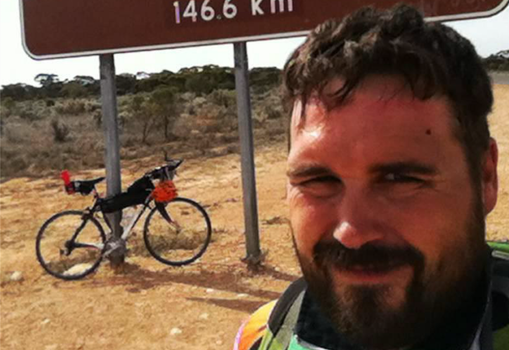
I googled ‘Longest Bike Race’ and found the World Cycle Race, a 30,000km bike race starting and finishing in Greenwich, London and on the 1st March 2014 I found myself on the start line of the event.
30,000km, 27 countries, 16 months and 43 flat tyres later I was the first person to cross the finish line of the race becoming the winner of the 2014 World Cycle Race, becoming only the tenth person in the world to complete an official circumnavigation of the planet by bike.
My main motivation for this adventure was to spread a very simple message that “It’s OK not to feel OK and absolutely OK to ask for help.”
The next time you greet someone with “How are you?” maybe take that minute to actually listen to the answer. It might just save a life.
Breifne will be appearing at the final lecture in the 2016 free Public Lecture Series at Saint John of God Hospital, Stillorgan this coming Monday at 8pm. He will be in conversation with Donal Scanlan, Health Promotion Nurse Specialist from Saint John of God Hospital, discussing his story, followed by a Q&A.