At the end of last year, we lost one of the greatest leaders to grace the planet. The former South African President and humanitarian leader, Nelson Mandela, died after a battle with a lung infection at his home in Houghton in Johannesburg. Unfortunately, or fortunately for the filmmakers, the latest biopic of his life was released not long after his death.
The problem with bringing Mandela to the big screen, particularly at the moment, is because everyone is familiar with his life in one way or another. They are more than aware that he was the first black President in South Africa, that he served a lengthy time in prison due to his stand against apartheid and everyone, everyone is aware of his unfathomable ability to forgive.
Mandela has not been a stranger to the big screen in various screen adaptations, but whether there was a need to bring another interpretation of his life to the big screen will continue to be debated.

Based on the Long Walk to Freedom, the autobiographical book of his life, the film charts Mandela’s life from a very young age, with his humble beginnings as a member of a tribe to his career as a lawyer. His first marriage and his career are brushed over quite quickly to make way for when he joined the African National Congress.
Mandela’s membership of the African National Congress and the violent tactics they eventually resorted to resulted in his 28 year imprisonment on Robben Island. Due to his time in prison, Mandela’s family life suffered, he left behind a young wife, Winnie, and two girls, both of which were prevented from seeing him for years. By the time of his release, South Africa had changed substantially, becoming more violent, the tension between blacks and white considerably increasing. Mandela’s eventual Presidency after his release shaped the future of not only South Africa, but other countries suffering with racial and political tensions.
The one massive problem Mandela suffers from is its lenght and to a certain extent the subject matter; Mandela’s life is just far too exceptional to squeeze into just over two hours of screentime. Certain periods in his life which would be considered important or interesting are ultimately glossed over in a major rush to push the plot forward.

On top of that, the reason Mandela was so popular and how his profile grew is barely alluded to, you just take for granted that he was the most important political member of the ANC and the one who eventually changed the face of South Africa but how important he was to the people around him and the real impact he had besides the guerrilla tactics and the violence he used isn’t exactly documented too well. Unfortunately, as we mentioned above, it’s not an easy life to bring to the big screen. Mostly it is the story of human survival.
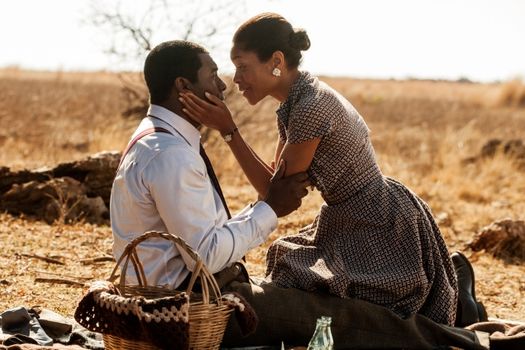
However, the performances are amazing. Idris Elba, who will most certainly guarantee himself an Oscar nomination, does justice to the character of Mandela, picking up his quirks, emphasizing his love of people, his patience, his forgiveness but mostly an amazing memory. Naomie Harris as Winnie is spectacular, demonstrating where aggression, determination and defiance can become spectacularly violent. Although this is meant to be the story of the woman behind Mandela, she features little towards the end, despite her impact.
Although it has its issues, Mandela is well worth checking out but perhaps suffers from not focusing on one point in this man’s spectacular life and career.
http://www.youtube.com/watch?v=Tyo-XeVcan4