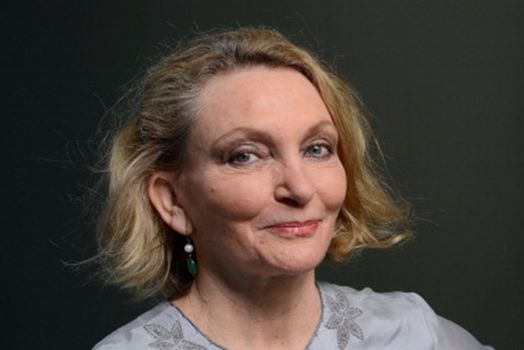
This week sees the release of Tracks, a film which tells the story of Robyn Davidson, a woman who set out across the desert in Australia, a distance of 1,700 miles, with just a dog and four camels to accompany her. Davidson, who became known as the “Camel Woman”, wrote her story in the book Tracks, which has become an international bestseller. Last week, we got to sit down with this living legend and discuss her trip and how she feels about the film.
Davidson explained how the film had taken a while to get out of the crowd: “Well, it’s been through so many avatars, this film. Straight after the book was published, which was in 1981, people wanted to make a film out of it. It went through a few producers over the years. I had never really wanted it to go to Hollywood, I thought that it should remain a smaller film, particularly because of the Aboriginal content.So I tried to stop it going to Hollywood but it slipped past me anyway and at one point, Julia Roberts was going to play me. Then, it came around and ended up with Emile Sherman and I just liked him. Even though by then I was quite jaded, when I met him, I thought, yes, this is going to be the one.”
There has been a lot of discussion about the reason for the journey: “I didn’t want to conquer anything, I wanted to merge into which was a different kind of thing. Getting to the end was not the point, and the camels were not the point, they were a practical way of carrying my gear, a practical solution to a lack of cash. Really, I did it for personal, private reasons.”

In terms of being more appealing to one gender rather than the other, Davidson thinks the story should appeal to many: “I really think that’s sad that it appeals to one sex more than the other. I love that young women get something from it and that it might encourage them to take a few risks themselves but I don’t think it’s just a girls story, it should be for everyone.”
However, the story does stay with the reader, both after the book and the film: “I think it’s mythical. The notion of that kind of journey is very deeply routed in us. That’s part of it. I think, being a woman gives it another slant that’s unusual. But also now I think, particularly now, we’re all connected up all the time, trying to get under the radar is becoming impossible. We’ve got to find ways of doing that, there’s no privacy left, there’s no internal life anymore. It’s important for people to have a particular kind of solitude and encourage it.”
The isolation in particular was, at times, difficult: “Most of the time it was liberating. There were difficult times, particularly in the first third of the trip, shedding the person I was before and finding it difficult to enter into the new sort of mentality that it required. There were tensions and doubts, worries about all of that. By the end, being alone was a complete joy. Because I had let go of all of the neurosis I had prior to that, it was liberating. The more isolated I was, in a sense, the more connected I felt to everything. So I was the opposite of lonely, even though I was alone.
This made the attention a little trying after the journey: “Yes, it was! Going into the dessert was difficult because I had to shed so many aspects of myself but coming back was even tougher. Two weeks after the journey I was in New York, I got a full blast of culture shock (laughs).”
In terms of her favourite memory, Davidson doesn’t really have one in particular: “Memory is such a slippery strange thing. I do get flashbacks of that exquisite landscape every now and then. Moments when you’re fully present and aware of where you are, moments when the mind expands out, that was good.”
Of course, we had to talk about the wonderful Mister Eddie, her companion on the journey: “I saw him again a couple of times after the journey. He made me his wife! (laughs) Pretty nerve racking the first time I heard. What happens in Aboriginal culture, you get some sort of relationship status, daughter,siser-in-law, whatever. I didn’t find this out until I went back to visit him. I’ll never know why he did that, it’s quite an unusual thing for him to have done. But then, coming on the trip was an unusual thing for him to have done. Even within his community, he was a one-off, a very interesting man.”
She was entirely comfortable with him: “I was and in a way being with him, it sorted out a lot of my previous obsessions. I was obsessed with time before that, completely bonkers, mad. In retrospect, I needed those structures to stop me from spinning out too much. Being with Eddie got me into a different rhythm. I just watched how totally, utterly, profoundly at home he was, entirely free of a kind of neurosis.”
People still ask, however, why exactly she did the journey: “That’s always the first question. Firstly, there is no why! The why is too huge, pointless asking it. And two, why wouldn’t I do something like that, it was so wonderful, I learnt so much, that desert, that aesthetically exquisite experience. I like to turn the question on its head, why don’t people do great things more often.”
Davidson is a big fan of the film production of her book: “I like it more each time I see it, it’s a subtle film, it bares watching more than once. I love Mia in particular so that’s the icing on the cake for me. It made me feel that I could feel proud of it.”
She claims there isn’t really a message from the film, but if there was one, it would be simple: “If there were one, be adventurous in your life. Extend the boundaries a bit. Find our what your capabilities and strengths are, because they’re bound to be more than you ever knew.”
Tracks is in cinemas from this Friday, 25th April.